He who tries, will be wasted
Feed my eyes, now you’ve sewn them shut
There is nothing like creating a FOMC meeting preview and finding a way to tie a classic Alice in Chains song to Warsh’s fate.
For the record, I have nothing personal against Fed Chair Warsh but I do have a tinge of sympathy as this was the Fed meeting that Kevin has been dreading. The cover of saying the phrase “task force” is no more. The cover of the President is non-existent as Trump lives in this delusion that only he can recreate the economy of 1893 and it will be magawesome. Now Kevin Warsh has to be his own man and set the course of the Fed during his tenure or face the risks of being labeled an administration stooge if he risks everything to accommodate the bizarre economic theories of Trumponomics.
Federal Reserve Chairman Warsh has no one to save him from the box of his own making. The United States economy is in a quite precarious position where his prior statements have built a box for his policies that both reflect hawkishness at times and others, a dovish tendency when the political winds require a shift. Historically however, this is not a unique position and mistakes have been made not just once, but repeatedly dating all they way back to the 1920’s when the stock market got a “coup de whiskey” from the NY Fed President Benjamin Strong.
This begs the question, what does tomorrow mean as America enters into a new era, exiting the techno-industrial period and into a new artificial intelligence technocratic regime. Let us review some history of the moves from the Federal Reserve before ascertaining a guess on tomorrow’s FOMC action.
I. September 22, 1987
I’m the dog who gets beat, shove my nose in sh**
Won’t you come and save me, save me?
One statement from the FOMC meeting that month stands out to this author:
Price increases have eased in recent months; the CPI and PPI for finished goods both rose 0.2 percent in July, and the August PPI was unchanged.The deceleration in these price measures from the pace in the first half of the year largely reflected a downturn in food prices and smaller energy price increases. Producer prices for finished foods fell sharply in August, and although the effect of rising oil prices continued to be evident, declines in both spot and contract prices were likely to damp retail energy prices by
early autumn.Excluding food and energy, the CPI rose in July at around the reduced pace of the second quarter and the comparable PPI increased moderately over the first two months of the current quarter. At its meeting on August 18, the Committee adopted a directive that called for maintaining the existing degree of pressure on reserve positions.
The members decided that somewhat greater reserve restraint would, or slightly lesser reserve restraint might, be acceptable depending on indications of inflationary pressures, the strength of the business expansion, developments in foreign exchange markets, as well as the behavior of the monetary aggregates.
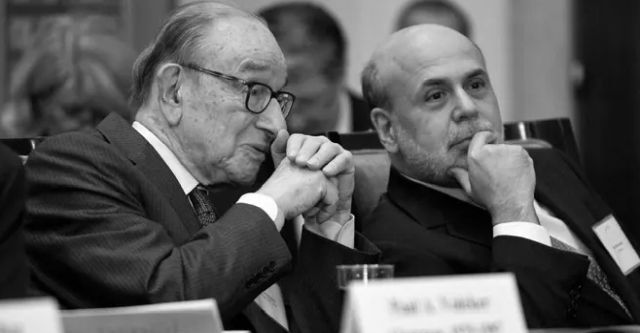
Alan Greenspan wanted to continue the inflation fighting polices of his predecessor, Paul Volcker, which meant that a strong message to markets had to be issued to prevent any misunderstanding that any hint of inflation would be tolerated. The Richmond Fed published an article in the fall of 2006 titled “Initiation by Fire” with this excellent excerpt:
“Investors feared that Greenspan would not be the aggressive inflation fighter that Volcker had been and that he might look the other way rather than squelch inflationary pressures if that meant slowing the economy before the November 1988 presidential election,” McClain notes. Greenspan quickly disproved this perception when he took office on Aug. 11, 1987. At his first meeting of the Federal Open Market Committee, which includes the Board of Governors, the New York Fed president, and a rotating group of four other Reserve Bank presidents, the committee agreed to lean toward tightening policy between August and its next meeting on Sept. 22 if circumstances warranted it.
This gave Greenspan a window of opportunity to use his authority in between FOMC meetings to initiate small adjustments in the
federal funds rate, the interest that banks charge each other to lend reserves. On Sept. 3, the rate moved up a quarter of a point to a range of 6.75 percent to 7 percent.The next day, Greenspan persuaded his fellow members of the Board of Governors to raise the discount rate half of a point to 6 percent, the first increase since April 1984. (In response, the funds rate rose again to 7.25 percent.) Changes in the discount rate —
the interest that the Federal Reserve charges to lend reserves to banks — served as an important signal to financial markets about the Fed’s policy intentions because changes in the funds rate weren’t yet publicly announced.
For the record, the open admiration of Chair Greenspan’s track record has been reflected by Warsh’s prior comments and that’s worth watching as his reign as Fed Chair moves forward.
One key thing to remember about that time period is that the United States was basically at war with Iran at that time also, exchanging fire in the Persian Gulf with oil prices in the midst of a degree of uncertain direction despite ample supply inside the United States.
Needless to say what happened after the FOMC action received partial blame for the crash of October 1987 which can quite aptly be called “history” as the market implosion still resonates with those of us who remember watching the event live on cable television.
II. September 18, 2007
He who tries, will be wasted
Feed my eyes, now you’ve sewn them shut
The FOMC statement was stunning to those who remember that era:
The Federal Open Market Committee decided today to lower its target for the federal funds rate 50 basis points to 4-3/4 percent.
Economic growth was moderate during the first half of the year, but the tightening of credit conditions has the potential to intensify the housing correction and to restrain economic growth more generally. Today’s action is intended to help forestall some of the adverse effects on the broader economy that might otherwise arise from the disruptions in financial markets and to promote moderate growth over time.
Readings on core inflation have improved modestly this year. However, the Committee judges that some inflation risks remain, and it will continue to monitor inflation developments carefully.
Developments in financial markets since the Committee’s last regular meeting have increased the uncertainty surrounding the economic outlook. The Committee will continue to assess the effects of these and other developments on economic prospects and will act as needed to foster price stability and sustainable economic growth.
Despite the gloom and doom that Chair Bernanke and company reflected on knowing full well what was happening in the asset based securities markets, what happened in the third quarter of 2007?
Here is the official news release with the GDP results from the third quarter of that year:

Today’s GDP Now reading from the Atlanta Federal Reserve Bank:
4.4%
III. September 26, 2018
Feed my eyes, can you sew them shut?
Jesus Christ, deny your maker
Stop me if the song or the statements seem historically familiar. But on September 26, 2018 the Federal Reserve Open Market Committee met with a new bright eyed and bushy tailed Fed Chairman named Jerome Powell. Now this poor soul was put immediately into the Trump circus, aka, the “box” with Trump browbeating the Federal Reserve for months into demanding rate decreases.
Yet the results of the FOMC meeting on the 26th spoke volumes about the Fed trying to remain independent of Executive Branch influence and market desire:
Consistent with its statutory mandate, the Committee seeks to foster maximum employment and price stability. The Committee expects that further gradual increases in the target range for the federal funds rate will be consistent with sustained expansion of economic activity, strong labor market conditions, and inflation near the Committee’s symmetric 2 percent objective over the medium term. Risks to the economic outlook appear roughly balanced.
In view of realized and expected labor market conditions and inflation, the Committee decided to raise the target range for the federal funds rate to 2 to 2-1/4 percent.
In determining the timing and size of future adjustments to the target range for the federal funds rate, the Committee will assess realized and expected economic conditions relative to its maximum employment objective and its symmetric 2 percent inflation objective. This assessment will take into account a wide range of information, including measures of labor market conditions, indicators of inflation pressures and inflation expectations, and readings on financial and international developments.
Of course this seemed like a prudent course of action and dare I quote all the FinTwit super economists and bubblevision guests, a period where the word “normalization” of rates was bandied about.
That worked great until the December 2018 Christmas Crash which culminated on December 24th and ended on the 25th when the Fed leaked via one of its governors that Quantitative Easing was still possible along with a relaxation of rates to prevent the stock market from continuing a major decline.
IV. September 16, 2026
I’m the man in the box, buried in my sh**
Won’t you come and save me, save me?
Sorry Kevin, it’s your box, you made it, now enjoy it.
What do I mean with my own acerbic style of snarkasm? Kevin Warsh has long wanted this position with the Federal Reserve and until the masses see otherwise, his ideas of modernizing this antiquated institution for the 21st Century should be respected. Unfortunately for Chair Warsh, since the 1987 crash, the position has become far more political than any decade dating back to the late 1920s, and that should terrify the investing public and of course world.
If one is to believe the economic data, inflation is becoming tamer, despite many obvious misreadings due to poor economic inputs from financially motivated sources. GDP is booming but the media promotes it being based primarily on a ‘strong consumer’ yet ignored the majority of the lowest two economic castes struggling with sticky inflation stuck above the Fed target of 2% for well over 5 years now.
The current CBOE Fed Watch predicts the following outcome to tomorrow’s meeting:

The problem for the Fed, especially Mr. Warsh is that the bond vigilantes are beginning to stir as reflected by today’s poor 20 year auction and the market reaction with the $TLT ETF indicating a historic low since 2004 is about to be violated:

What does all of this mean for tomorrow?
The 25 bps rate increase is all but baked into the markets. While there is a 50/50 possibility of a reflex rally after the FOMC statement, the Summary of Economic Projections (SEP) and post-meeting press conference by Chair Warsh will have the lasting impact markets are seeking.
It is no longer about equities, current GDP, inflation, or Trump’s political desires before the midterm elections. The Federal Reserve faces an instability crisis unseen since 2007 and 2018 while the bond market has been expressing its disapproval of the actions of the political leadership in the United States and the management of the financial system for the last decade by those trusted to ensure rational outcomes.
The FOMC statement will be the key and the results of the presser which will impact credit markets shall become visible after the Bank of Japan rate decision on Thursday night (Eastern time) and the market open in New York on Friday. The next 90 days in the United States will provide insights if we as a nation and the Fed as a central bank, will once again mirror the errors of the past.
Feed my eyes, now you’ve sewn them shut